
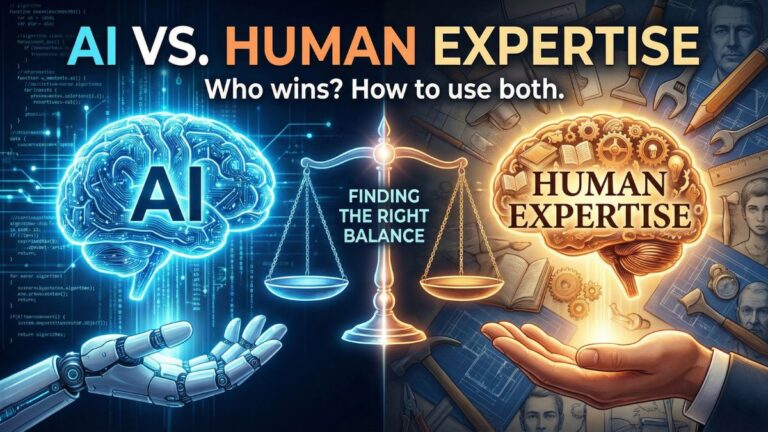
The digital revolution has ushered in an era where artificial intelligence and human intelligence coexist, collaborate, and sometimes compete. As businesses worldwide grapple with digital transformation, the question isn’t whether to choose AI or human expertise—it’s about finding the optimal balance between the two. This comprehensive guide explores how organizations can leverage both AI capabilities and human ingenuity to achieve unprecedented success.
Understanding the AI Revolution in Modern Business
Artificial intelligence has evolved from a futuristic concept to an everyday reality. According to McKinsey’s research, over 50% of organizations have adopted AI in at least one business function. The technology has transformed industries ranging from healthcare to finance, manufacturing to marketing, creating new opportunities while simultaneously raising important questions about the role of human expertise.
IBM’s AI adoption study reveals that businesses implementing AI alongside human workers see a 40% increase in productivity compared to those relying solely on one approach. This statistic underscores a critical insight: the future belongs not to AI or humans alone, but to their harmonious collaboration.
The Current State of AI Technology
Today’s AI systems excel at processing vast amounts of data, identifying patterns, and executing repetitive tasks with remarkable precision. Machine learning algorithms can analyze millions of data points in seconds, providing insights that would take humans weeks or months to uncover. From chatbots handling customer service to AI systems diagnosing diseases, the applications are boundless.
However, as noted by Harvard Business Review, AI still struggles with tasks requiring emotional intelligence, creative problem-solving, and nuanced judgment—areas where human expertise remains irreplaceable.
The Irreplaceable Value of Human Expertise
While AI continues to advance, certain human capabilities remain uniquely valuable. Emotional intelligence, creativity, ethical reasoning, and the ability to navigate complex social situations are distinctly human traits that AI cannot replicate.
Creativity and Innovation
Human creativity drives innovation in ways that AI cannot match. As explored in mmtechbpo.com’s content writing guide, the ability to craft compelling narratives, develop unique perspectives, and create emotionally resonant content remains firmly in the human domain. Stanford researchers found that while AI can generate content, humans consistently outperform machines in producing truly novel and meaningful creative works.
Emotional Intelligence and Empathy
In customer-facing roles, human empathy creates connections that AI cannot replicate. Studies from MIT demonstrate that customers prefer human interaction for complex issues, especially those involving emotional distress or nuanced decision-making. This is why successful companies combine AI efficiency with human touchpoints, as detailed in mmtechbpo.com’s marketing strategies.
Ethical Decision-Making
Humans possess the moral compass necessary for ethical decision-making. The IEEE’s guidelines on ethical AI emphasize that while AI can process ethical frameworks, humans must ultimately make judgment calls that consider cultural contexts, stakeholder impacts, and long-term consequences.
Where AI Excels: Leveraging Machine Intelligence
AI’s strengths lie in areas where speed, scalability, and data processing are paramount. Understanding these capabilities helps organizations deploy AI effectively while maintaining human oversight.
Data Analysis and Pattern Recognition
AI systems can analyze datasets that would overwhelm human analysts. Google’s research shows that machine learning models can identify patterns across billions of data points, enabling predictive analytics that inform strategic decisions. This capability has revolutionized industries from e-commerce to healthcare diagnostics.
Automation of Repetitive Tasks
AI excels at automating routine tasks, freeing humans for higher-value work. Research from PwC estimates that AI could contribute $15.7 trillion to the global economy by 2030, primarily through productivity gains from automation. As demonstrated in mmtechbpo.com’s SEO strategies, AI tools can handle technical optimization while humans focus on strategy and creativity.
24/7 Availability and Consistency
Unlike humans, AI systems don’t require rest, maintaining consistent performance around the clock. This makes them ideal for customer service chatbots, security monitoring, and social media management, as highlighted by Forrester’s analysis.
Finding the Sweet Spot: Hybrid Intelligence Models
The most successful organizations don’t choose between AI and human expertise—they integrate both. Deloitte’s insights reveal that hybrid intelligence models, where AI augments human capabilities, deliver superior outcomes across industries.
Augmented Decision-Making
AI can provide data-driven insights while humans apply context and judgment. In financial services, AI algorithms analyze market trends and risk factors, but human advisors interpret these insights within the context of individual client needs and goals. This approach, similar to strategies outlined in mmtechbpo.com’s case studies, combines analytical power with human wisdom.
Enhanced Creativity
AI tools can assist creative processes without replacing human ingenuity. Adobe’s research demonstrates that when designers use AI for ideation and iteration, they produce more innovative outcomes faster. This synergy is evident in content creation, where AI handles research and optimization while humans craft compelling narratives.
Personalized Customer Experiences
Combining AI’s data processing with human empathy creates superior customer experiences. Salesforce studies show that customers value personalization powered by AI but expect human intervention for complex issues. This balance is crucial in digital marketing, where AI personalizes at scale and humans add the creative touch.
Industry-Specific Applications of AI-Human Collaboration
Different industries require unique approaches to balancing AI and human expertise. Let’s explore sector-specific strategies that maximize the benefits of both.
Healthcare: Diagnosis Meets Compassion
In healthcare, AI assists with diagnosis and treatment planning while doctors provide personalized care. Studies from Johns Hopkins show that AI-assisted diagnosis improves accuracy by up to 20%, but patient outcomes are best when combined with physician expertise and bedside manner.
Education: Personalized Learning at Scale
Educational technology uses AI to personalize learning paths while teachers provide mentorship and motivation. Research from Stanford indicates that adaptive learning platforms powered by AI, combined with teacher guidance, improve student outcomes significantly more than either approach alone.
Manufacturing: Precision Meets Problem-Solving
Smart factories leverage AI for quality control and predictive maintenance while human engineers handle complex troubleshooting. MIT’s research on Industry 4.0 shows that this combination reduces defects by 50% while maintaining flexibility for custom production, similar to innovations discussed in mmtechbpo.com’s technology case studies.
Marketing: Data-Driven Creativity
Modern marketing combines AI analytics with human creativity for optimal results. As detailed in mmtechbpo.com’s marketing insights, AI tools analyze customer behavior and optimize campaigns while marketers craft compelling messages and build authentic brand connections. HubSpot’s research confirms that this hybrid approach increases ROI by up to 40%.
Finance: Algorithmic Trading Meets Strategic Thinking
Financial institutions use AI for algorithmic trading and risk assessment while human analysts provide strategic oversight. Bloomberg’s analysis shows that combining machine speed with human judgment creates more resilient investment strategies, as exemplified in mmtechbpo.com’s business case studies.
Implementing AI-Human Collaboration in Your Organization
Successfully integrating AI and human expertise requires strategic planning and cultural change. Here’s a comprehensive framework for implementation.
Step 1: Assess Your Needs and Capabilities
Begin by identifying tasks that would benefit from AI automation and those requiring human judgment. Gartner’s framework recommends conducting a thorough assessment of your current workflows, pain points, and opportunities for improvement.
Step 2: Choose the Right AI Tools
Select AI solutions that complement your team’s strengths. Whether implementing SEO optimization tools or customer service chatbots, ensure they integrate seamlessly with existing systems. TechCrunch’s reviews can help identify suitable technologies.
Step 3: Train Your Team
Invest in upskilling your workforce to work effectively with AI. LinkedIn’s Workplace Learning Report emphasizes that companies prioritizing AI literacy see faster adoption and better outcomes. Resources like mmtechbpo.com’s skill development guides can support this training.
Step 4: Establish Clear Protocols
Define when AI handles tasks autonomously and when human intervention is required. Accenture’s guidelines suggest creating decision trees that clarify these boundaries, ensuring consistency and quality control.
Step 5: Monitor and Iterate
Continuously evaluate the performance of your AI-human hybrid system. Forrester’s best practices recommend regular audits, feedback loops, and adjustments based on outcomes and emerging technologies.
Overcoming Challenges in AI-Human Integration
Despite its benefits, integrating AI and human expertise presents challenges. Understanding and addressing these obstacles is crucial for success.
Resistance to Change
Employees may fear AI will replace their jobs. Research from MIT Sloan shows that transparent communication about AI’s role as an augmentation tool, not a replacement, reduces anxiety. Share success stories like those in mmtechbpo.com’s transformation case studies to illustrate positive outcomes.
Data Privacy and Security Concerns
AI systems require data, raising privacy issues. The World Economic Forum’s guidelines emphasize implementing robust security measures and transparent data practices. Compliance with regulations like GDPR and CCPA is essential.
Bias in AI Systems
AI can perpetuate biases present in training data. Stanford’s research on algorithmic fairness highlights the importance of diverse datasets and human oversight to identify and correct biases. Regular audits and diverse development teams help mitigate this risk.
Integration Complexity
Merging AI tools with existing systems can be technically challenging. Microsoft’s integration guides provide frameworks for smooth implementation, while resources like mmtechbpo.com’s development roadmap offer practical guidance.
The Future of AI-Human Collaboration
As AI technology evolves, the relationship between machines and humans will continue to transform. Understanding emerging trends helps organizations prepare for what’s ahead.
Advanced AI Assistants
Next-generation AI will offer more sophisticated assistance. OpenAI’s research on large language models demonstrates increasing capabilities in reasoning and context understanding, enabling deeper collaboration with human experts.
Emotional AI
Emerging technologies in affective computing will enable AI to better understand and respond to human emotions, creating more natural interactions in customer service and healthcare settings.
Quantum Computing and AI
IBM’s quantum research suggests that quantum-enhanced AI will solve complex problems currently beyond our reach, from drug discovery to climate modeling, with humans guiding these powerful tools toward beneficial outcomes.
Ethical AI Frameworks
Organizations like the Partnership on AI are developing comprehensive ethical frameworks to ensure AI development serves humanity’s best interests. This includes addressing issues of fairness, accountability, and transparency.
Measuring Success in AI-Human Systems
Implementing effective metrics ensures your hybrid intelligence approach delivers value. Key performance indicators should reflect both efficiency gains and qualitative improvements.
Productivity Metrics
Track time saved through automation and human performance on higher-value tasks. McKinsey’s methodology recommends comparing pre- and post-implementation productivity across different metrics.
Quality Indicators
Monitor error rates, customer satisfaction scores, and output quality. Zendesk’s customer service metrics provide frameworks for evaluating hybrid systems in service environments.
Innovation Measures
Assess the quantity and quality of new ideas generated through AI-human collaboration. IDEO’s innovation metrics offer guidance on evaluating creative outputs.
Employee Satisfaction
Survey employees about their experience working with AI tools. Gallup’s workplace research shows that successful AI integration correlates with higher job satisfaction when workers feel augmented rather than threatened.
Best Practices from Industry Leaders
Learning from organizations successfully balancing AI and human expertise provides valuable insights for your own implementation.
Google: AI-Powered Search with Human Quality Raters
Google uses AI algorithms for search rankings while employing thousands of human quality raters to evaluate results. This combination, detailed in Google’s search quality guidelines, ensures relevance and quality at scale, principles applicable to SEO strategies.
Amazon: Automated Warehouses with Human Oversight
Amazon’s fulfillment centers use AI-powered robots alongside human workers, each handling tasks suited to their strengths. Amazon’s innovation blog showcases how this collaboration increases efficiency while maintaining quality, similar to approaches in mmtechbpo.com’s logistics case studies.
Netflix: Algorithmic Recommendations with Human Curators
Netflix combines AI recommendation algorithms with human curators who understand cultural nuances and emerging trends. Netflix’s tech blog explains how this hybrid approach personalizes content while maintaining editorial quality.
Tesla: Autonomous Systems with Driver Oversight
Tesla’s approach to autonomous driving illustrates gradual AI integration with maintained human control. Tesla’s AI research demonstrates how incremental automation, always with human oversight, builds trust and safety, as discussed in mmtechbpo.com’s automotive innovations.
Building a Culture That Embraces AI-Human Partnership
Organizational culture determines whether AI-human collaboration succeeds or fails. Creating an environment that values both technological innovation and human contribution is essential.
Promote Continuous Learning
Encourage ongoing education about AI capabilities and limitations. Coursera’s AI courses and edX’s machine learning programs provide accessible training for teams at all levels.
Foster Experimentation
Create safe spaces for testing AI tools and learning from failures. Google’s approach to innovation emphasizes rapid prototyping and iteration, principles applicable to AI integration.
Celebrate Hybrid Success Stories
Recognize achievements that result from AI-human collaboration. Sharing internal success stories, similar to case studies on mmtechbpo.com, reinforces the value of this partnership and motivates teams.
Maintain Transparency
Be open about AI’s role in decision-making processes. Salesforce’s ethical AI principles emphasize transparency in building trust with both employees and customers.
The Role of Leadership in Balancing AI and Human Expertise
Effective leadership is crucial for successfully integrating AI while valuing human contribution. Leaders must navigate this transition thoughtfully and strategically.
Vision Setting
Leaders should articulate a clear vision of how AI and humans will work together. Harvard Business Review’s leadership insights suggest that successful transformation requires leaders who can inspire teams through change.
Resource Allocation
Invest in both AI technology and human development. Boston Consulting Group’s analysis shows that balanced investment in tools and training yields the best returns.
Change Management
Guide organizations through the cultural shift required for AI adoption. Prosci’s change management methodology provides frameworks for addressing resistance and building buy-in.
Ethical Stewardship
Ensure AI deployment aligns with organizational values and societal benefit. The IEEE’s ethical considerations offer guidance for responsible AI implementation.
Practical Tips for Small Businesses
Small businesses can also benefit from AI-human collaboration without enterprise-level resources. Here’s how to start small and scale strategically.
Start with Low-Hanging Fruit
Begin with simple AI applications like chatbots for common customer queries or AI writing assistants for content creation, as explored in mmtechbpo.com’s AI content writing guide. These tools offer quick wins without significant investment.
Leverage Free and Low-Cost Tools
Utilize accessible AI platforms like Google’s AI tools, free marketing automation software, and open-source machine learning libraries to experiment without major financial commitment.
Focus on Your Core Competency
Use AI to handle peripheral tasks while focusing human effort on what differentiates your business. Small Business Administration resources provide guidance on strategic technology adoption.
Network and Learn
Join communities focused on AI implementation for small businesses. LinkedIn groups and industry forums offer peer support and practical advice.
Security and Compliance Considerations
As you integrate AI systems, maintaining security and regulatory compliance is paramount. Understanding these requirements protects your organization and customers.
Data Protection Regulations
Ensure AI systems comply with GDPR, CCPA, and other data protection laws. The International Association of Privacy Professionals provides resources for navigating these complex requirements.
AI-Specific Regulations
Stay informed about emerging AI regulations. The European Union’s AI Act and similar frameworks worldwide will shape how organizations deploy AI systems.
Cybersecurity Measures
Protect AI systems from adversarial attacks and data breaches. NIST’s cybersecurity framework offers comprehensive guidance for securing AI infrastructure.
Audit Trails and Accountability
Maintain clear records of AI decision-making processes. Deloitte’s AI governance framework emphasizes transparency and accountability in AI systems.
The Human Touch in an AI-Driven World
As we navigate this AI revolution, preserving and celebrating human qualities becomes increasingly important. The goal isn’t to minimize human involvement but to elevate it.
Emphasizing Soft Skills
As AI handles technical tasks, human skills like empathy, creativity, and critical thinking become more valuable. LinkedIn’s skills data shows increasing demand for these competencies.
Maintaining Authentic Connections
In customer relationships, the human touch differentiates brands. Edelman’s Trust Barometer reveals that consumers value authentic human interaction, especially in high-stakes decisions.
Nurturing Creativity
Encourage environments where human creativity flourishes. Adobe’s creativity research demonstrates that removing mundane tasks through AI frees people for more innovative work.
Preserving Human Judgment
Ensure critical decisions remain under human control. As noted in mmtechbpo.com’s business strategy guides, human judgment in complex, ethical, or high-stakes situations is irreplaceable.
Conclusion: Embracing the AI-Human Partnership
The question is no longer whether to embrace AI or rely solely on human expertise. The future belongs to organizations that skillfully blend both, creating hybrid intelligence systems that leverage the strengths of each. As we’ve explored throughout this comprehensive guide, successful implementation requires strategic planning, cultural change, continuous learning, and thoughtful leadership.
By understanding AI’s capabilities and limitations, recognizing the irreplaceable value of human expertise, and implementing frameworks for effective collaboration, organizations can position themselves for success in an increasingly AI-driven world. The key is maintaining balance—using AI to augment human capabilities rather than replace them, automating routine tasks while elevating human work to more creative and strategic levels.
As you embark on your own AI-human integration journey, remember that this is an ongoing process of experimentation, learning, and refinement. Start with clear goals, invest in both technology and people, measure outcomes rigorously, and remain flexible as technologies and best practices evolve. The organizations that thrive will be those that view AI not as a threat to human workers but as a powerful tool that, when combined with human expertise, unlocks unprecedented potential.
For more insights on leveraging technology and human expertise in your business, explore mmtechbpo.com’s comprehensive resources on digital transformation, marketing strategies, and emerging technologies. The future is neither purely human nor purely artificial—it’s a collaborative partnership that harnesses the best of both worlds.
Frequently Asked Questions (FAQs)
1. Will AI eventually replace all human jobs?
No, AI is unlikely to replace all human jobs. While AI will automate certain tasks, it will also create new job categories and opportunities. World Economic Forum research indicates that while some jobs will be displaced, many more will be transformed, requiring humans to work alongside AI. Jobs requiring creativity, emotional intelligence, complex problem-solving, and ethical judgment will remain firmly in the human domain. The key is adapting skills to work effectively with AI rather than competing against it.
2. How can small businesses with limited budgets implement AI-human collaboration?
Small businesses can start with free or low-cost AI tools like chatbots, content generation assistants, and marketing automation platforms. As discussed in mmtechbpo.com’s digital marketing resources, many powerful tools are available at minimal cost. Begin with one area where automation would have the highest impact, measure results, and gradually expand. Cloud-based AI services offer pay-as-you-go models that make enterprise-level technology accessible to smaller organizations.
3. What skills should employees develop to thrive in an AI-augmented workplace?
Focus on uniquely human skills that complement AI: critical thinking, creativity, emotional intelligence, complex communication, and ethical reasoning. mmtechbpo.com’s skills guide highlights competencies increasingly valued in the AI era. Additionally, develop AI literacy—understanding how AI works, its capabilities and limitations, and how to effectively collaborate with AI systems. Adaptability and continuous learning are also crucial as technologies evolve.
4. How do you ensure AI systems don’t perpetuate bias or make unethical decisions?
Preventing AI bias requires diverse training data, regular audits, and human oversight of AI decisions. Implement ethics review boards, use diverse development teams, and establish clear guidelines for AI deployment. Stanford’s fairness research provides frameworks for identifying and mitigating bias. Always maintain human accountability for AI decisions, especially in high-stakes situations. Transparency in AI decision-making processes also helps identify and address potential issues.
5. What industries benefit most from AI-human collaboration?
Virtually every industry benefits from AI-human collaboration, but some see particularly dramatic impacts: healthcare (diagnosis and treatment planning), finance (risk assessment and fraud detection), manufacturing (quality control and predictive maintenance), marketing (personalization and optimization), and customer service (chatbots with human escalation). As shown in mmtechbpo.com’s case studies, successful companies across all sectors are finding ways to integrate AI while leveraging human expertise.
6. How can organizations measure ROI on AI investments?
Measure both quantitative and qualitative metrics: productivity improvements, cost savings, error reduction, customer satisfaction scores, employee satisfaction, and innovation outcomes. McKinsey’s ROI framework recommends establishing baseline metrics before implementation and tracking improvements over time. Consider both direct benefits (automation savings) and indirect benefits (enhanced employee capabilities, better customer experiences). Remember that some benefits, like improved decision-making quality, may take time to materialize.
7. What are the biggest challenges in implementing AI-human collaboration?
The main challenges include employee resistance to change, technical integration complexity, data privacy concerns, bias in AI systems, and determining appropriate boundaries between AI and human decision-making. Cultural challenges often prove more significant than technical ones. As outlined in mmtechbpo.com’s transformation guides, successful implementation requires strong change management, transparent communication, comprehensive training, and leadership commitment.
8. How do you maintain the human touch in customer service while using AI?
Design hybrid systems where AI handles routine inquiries and transactions while seamlessly escalating complex or emotionally charged issues to human agents. Use AI to enhance human interactions by providing agents with relevant information and insights in real-time. Zendesk’s research shows customers appreciate AI efficiency for simple tasks but value human empathy for complex problems. Train AI systems to recognize when human intervention is needed and make transitions smooth and transparent.
9. What role should leadership play in AI-human integration?
Leaders must set strategic vision, allocate resources for both technology and training, manage cultural change, establish ethical guidelines, and model effective AI-human collaboration. Harvard Business Review’s leadership research emphasizes that successful AI adoption requires leaders who understand both technology and people. Leaders should communicate transparently about AI’s role, address employee concerns proactively, celebrate hybrid successes, and ensure AI deployment aligns with organizational values.
10. What does the future hold for AI-human collaboration?
The future will see increasingly sophisticated AI systems working more seamlessly with humans. Expect advances in emotional AI that better understands human emotions, quantum-enhanced AI solving complex problems, more intuitive interfaces reducing friction in human-AI interaction, and comprehensive ethical frameworks governing AI deployment. The trend is toward augmentation rather than replacement, with AI handling an expanding range of tasks while humans focus on higher-order thinking, creativity, and relationship-building. Organizations that embrace this partnership will thrive in the decades ahead.