
FedEx’s Logistics Network: Engineering Global Speed

Global commerce moves at a tempo dictated by consumer expectation and industrial urgency. Critical components, temperature-sensitive pharmaceuticals, and time-definite retail parcels travel continents overnight. At the center of this capability sits FedEx Corporation, an enterprise that transformed freight transport from a fragmented relay into a synchronized global pipeline. Delivering millions of packages across more than […]
Boeing vs Airbus: A Case Study in Aerospace Brand Trust

In high-reliability industries, brand trust is not built on advertising campaigns or logo redesigns; it is forged through zero-defect engineering, transparent governance, and an uncompromising commitment to safety. Few sectors embody this reality more acutely than commercial aerospace. For over five decades, the global civil aviation market has operated as a titan duopoly: the American […]
Unilever’s Sustainable Brand Strategy: Purpose as Positioning
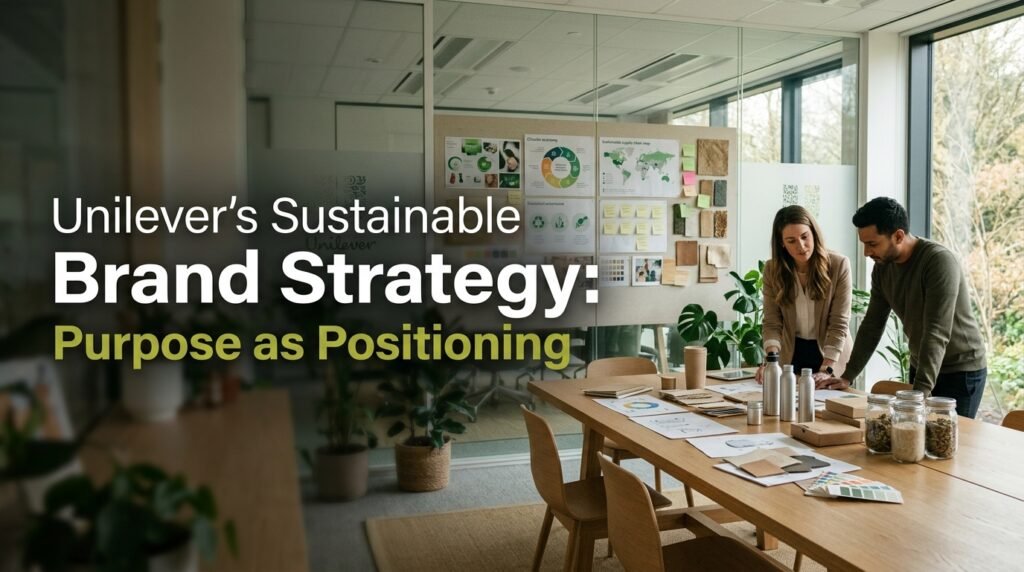
In modern consumer goods marketing, the debate over “brand purpose” has frequently swung between corporate skepticism and moral virtue signaling. Skeptics frame purpose as an expensive communications layer detached from commercial performance, while evangelists treat it as an ethical obligation. Unilever took a fundamentally different operational approach: treating corporate purpose as a strategic positioning engine […]
L’Oréal’s Beauty Tech Transformation: AI Meets Cosmetics

For over a century, the cosmetics industry was built on a straightforward formula: chemical formulation, elegant packaging, seasonal advertising campaigns, and department store counters. Today, that playbook is no longer enough. The global consumer now expects hyper-personalization, immediate feedback, and precision efficacy. At the forefront of this shift is L’Oréal Groupe, the world’s largest beauty […]
Zoom’s Pandemic-Era Scaling: Lessons in Rapid Infrastructure Growth

In December 2019, Zoom hosted roughly 10 million daily meeting participants. By April 2020, that number had surged to over 300 million—a staggering 30x spike in traffic within four months. Virtually overnight, Zoom evolved from a trusted corporate video tool into essential global communication infrastructure. Classrooms, government cabinets, family gatherings, medical consults, and multinational boardrooms […]
Slack’s Enterprise Disruption: Killing Email One Channel at a Time

For nearly four decades, email stood as the unquestioned circulatory system of corporate life. It was the ultimate digital paper trail: persistent, ubiquitous, and universal. Yet, as modern knowledge work accelerated, the very mechanics that made email powerful—its asynchronous, siloed, point-to-point architecture—began to choke organizational agility. Workers found themselves drowning in labyrinthine reply-all threads, buried […]
Dropbox’s Viral Referral Engine: A Growth Hacking Case Study

In the late 2000s, the cloud storage market was crowded, commoditized, and plagued by high customer acquisition costs (CAC). Incumbents like Microsoft and Box competed fiercely against an array of early file-sync utilities. When Dropbox launched publicly in 2008, founders Drew Houston and Arash Ferdowsi encountered a brutal economic reality familiar to many early-stage SaaS […]
Patagonia’s Purpose-Driven Marketing: Profit with a Conscience

In modern commercial branding, “purpose” is frequently treated as an afterthought—an executive PR campaign, a colorful badge on a corporate website, or an ESG disclosure tucked away in an annual report. Consumers, increasingly sensitized to performative posturing, routinely spot and reject greenwashing. Yet, one brand has consistently operated on a model where mission precedes merchandise: […]
Duolingo’s Gamification Playbook: Turning Learning into Habit

Language learning has traditionally carried a high barrier to entry: dense textbooks, expensive classroom sessions, rote conjugation drills, and an intimidating learning curve that produces an attrition rate well above 90%. Duolingo bypassed this friction not by rewriting the fundamentals of linguistics, but by restructuring how humans interact with digital products. Instead of treating language […]
Canva’s Product-Led Growth: Democratizing Design
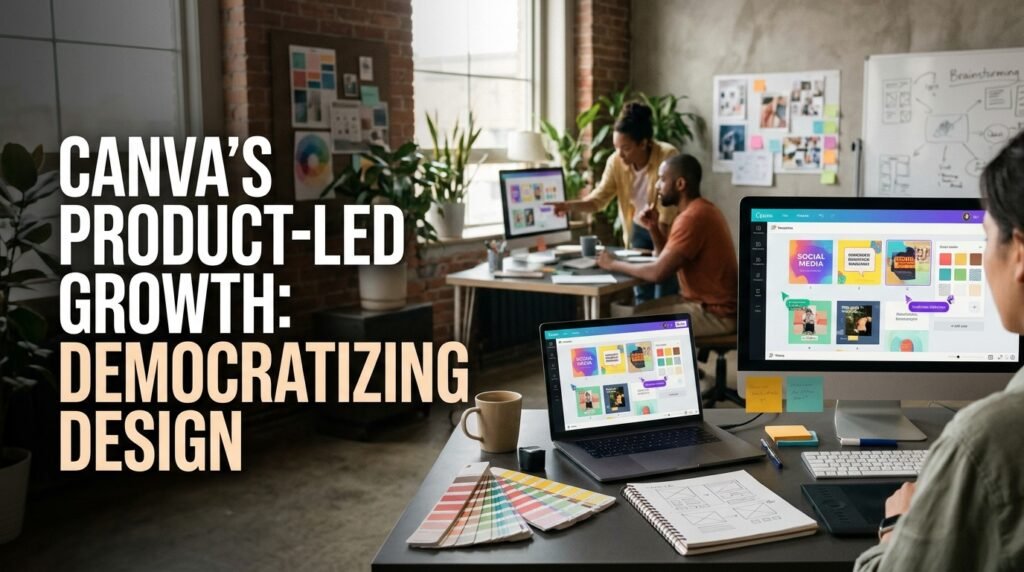
Before 2013, the graphic design landscape was split into two extremes: complex, expensive professional software packages or rudimentary office presentation tools. Mastering industry-standard tools required months of formal training, deep familiarity with layer hierarchies, vector paths, and raster adjustments, alongside recurring subscription fees. For small business owners, educators, marketers, and social media managers, creating a […]